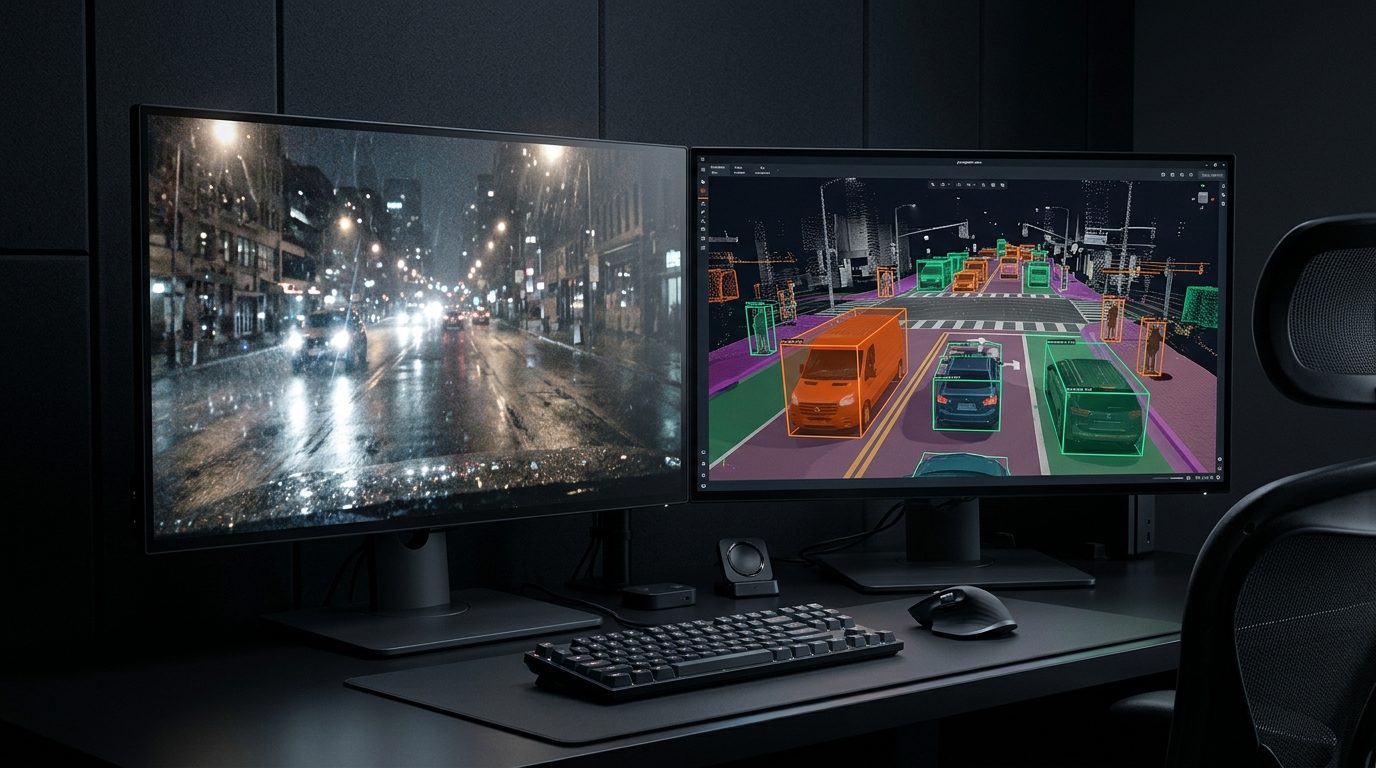
The automotive industry is changing quickly. Modern vehicles are becoming smarter with features that can detect nearby objects, warn drivers about possible dangers, and help prevent accidents. These technologies are made possible by Advanced Driver Assistance Systems (ADAS) and Artificial Intelligence (AI). AI models need large amounts of useful data to learn how to recognise objects and respond to different situations: making ADAS data collection a foundational pillar in the development of smarter and safer vehicles.
What Is ADAS Data Collection & Why It Matters
Advanced Driver Assistance Systems (ADAS): including lane departure warnings, parking assistance, collision alerts, automatic emergency braking, and traffic sign recognition: use cameras, radar, LiDAR, and in-cabin microphones to perceive the vehicle's surroundings. Before this raw sensor stream can train reliable machine learning models, it must capture diverse weather, lighting, and traffic conditions and be accurately labelled, organised, checked, and prepared according to strict project requirements.
Road images and multi-angle driving videos
Information about nearby vehicles, cyclists, and pedestrians
Traffic signs, signals, and road markings
Lane markings and varying road surface conditions
Vehicle movement dynamics and multi-sensor readings (LiDAR/Radar)
Driver voice commands and in-cabin audio recordings
How ADAS Data Collection Supports AI Development
Helping Machine Learning Models Learn: Training models on labelled road images, driving videos, and sensor readings of cars, bikes, pedestrians, traffic lights, and road signs so they accurately identify objects in unseen driving scenes.
Supporting Road Safety: Training AI systems to recognise hazards, vehicles moving too close, pedestrians crossing, or obstacles blocking the driving path, across rain, fog, low light, and busy urban roads to power collision warnings and emergency braking.
Improving the Driving Experience: Supporting comfort and convenience features like parking assistance, adaptive cruise control, lane keeping assistance, and personalised driver settings (seat position, temperature, entertainment).
Integrating Audio and Speech Data in ADAS: Collecting diverse voice recordings across accents, speaking styles, background road/cabin noise, and common commands so drivers can control navigation, calls, and settings hands-free.
The Role of Audio and Speech Data in Modern Vehicles
When we talk about ADAS data, images and sensor information often get the most attention. However, audio and speech data also play an important role in modern vehicles. Many vehicles now support voice commands that allow drivers to control navigation, make calls, adjust settings, or interact with entertainment systems without using their hands.
To develop these features, AI models need suitable speech and audio data for training. Voice recordings help models understand different accents, speaking styles, background noise, and common commands. At DaQube.ai, audio and speech data collection is planned alongside visual and sensor requirements for projects that involve multiple types of information.
What Does the Future Hold for ADAS Data Collection?
As automotive technology continues to develop, the demand for useful and diverse training data is expected to grow. Future ADAS systems will need to work reliably across different environments, road conditions, weather situations, and traffic patterns.
We will also see greater use of AI in connected vehicles, advanced driver monitoring, voice-controlled systems, and autonomous driving research, all depending on well-prepared datasets that help AI models understand real-world situations.