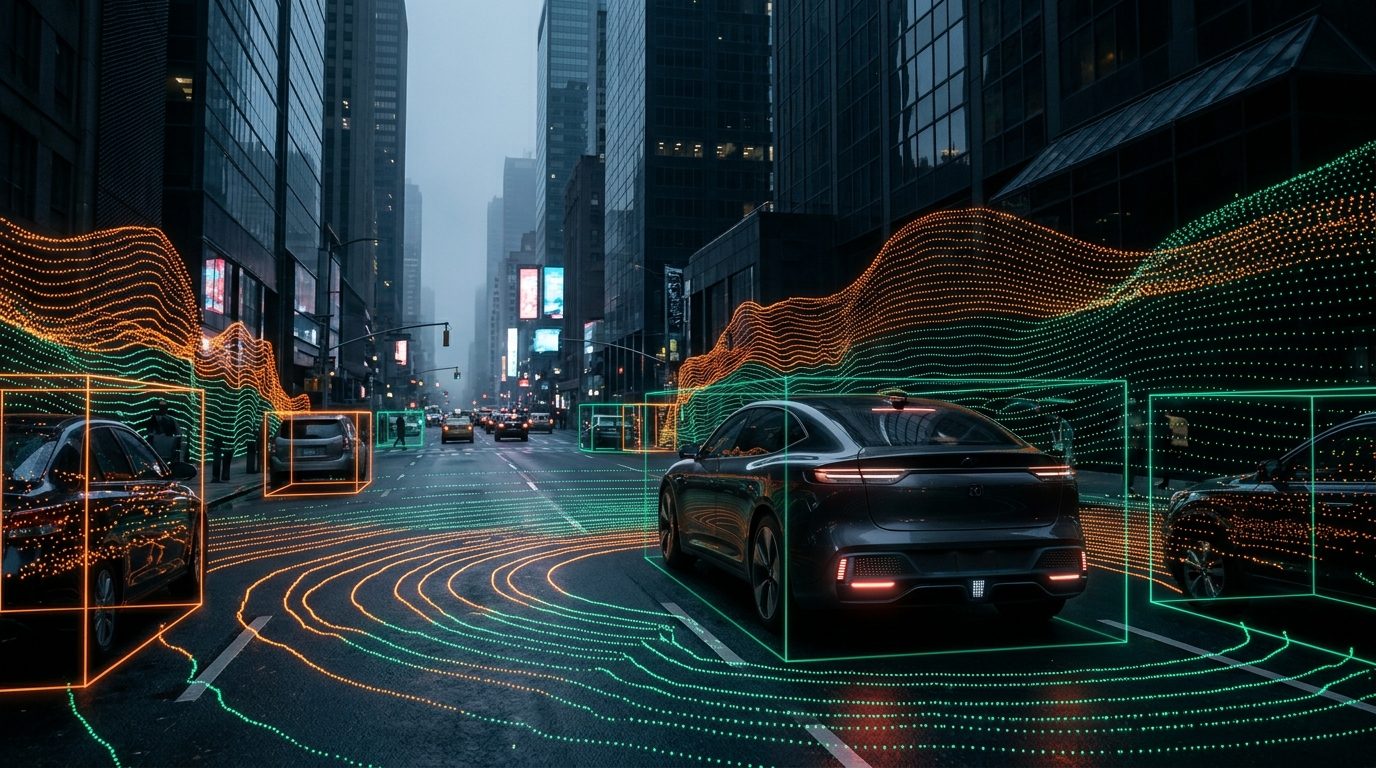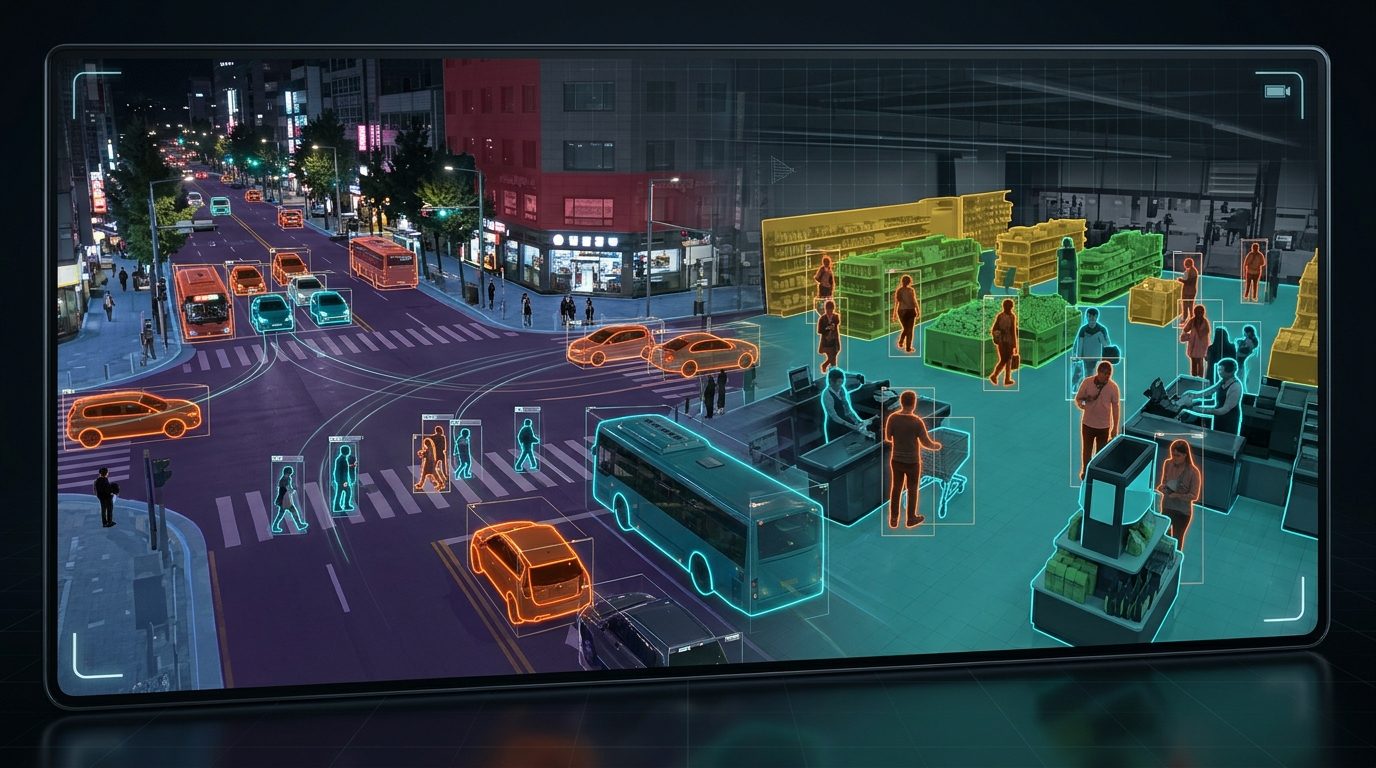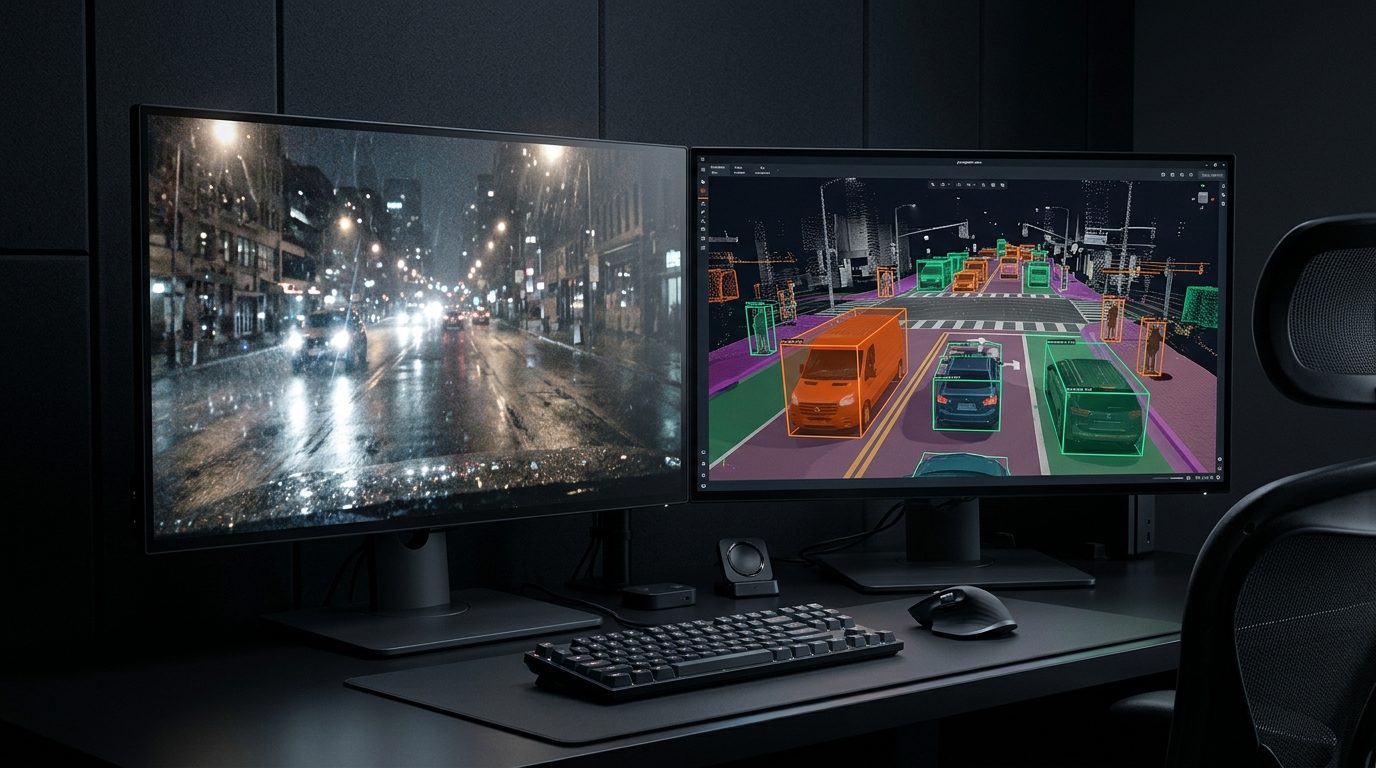
Modern vehicles rely on AI and ADAS features like lane detection, automatic emergency braking, parking assistance, and collision warnings. While cameras, radar, and sensors collect massive volumes of road data, raw data is not enough: it must be accurately labelled so AI models understand what is happening on the road. This comparison examines human annotation versus automated self-annotation and shows how combining both methods optimizes large-scale ADAS pipelines.
Choosing Between Manual Precision and Automated Scale
ADAS perception models require millions of labelled images, video frames, and sensor sweeps marking vehicles, pedestrians, road signs, and lane markings. Relying solely on manual human annotation takes significant time, requires large teams, and risks inter-annotator differences without strict guidelines. Conversely, relying solely on automated self-annotation tools struggles with rare road conditions, poor lighting, occluded objects, and unusual events: producing label errors if not reviewed by humans.
Human-Annotated ADAS Data: Manual labelling by trained annotators following project guidelines
Self-Annotated ADAS Data: Automated pre-labelling using AI tools and machine learning models
Hybrid Human-in-the-Loop Data: Automated initial bounding boxes/labels verified and corrected by human specialists
Comparing Human Annotation vs. Self-Annotation
Human Annotation Benefits: Superior attention to detail, ability to handle complex scenes (crowded roads, poor visibility, partially hidden objects), and high flexibility when project guidelines evolve.
Human Annotation Limitations: Slower manual throughput across millions of frames, higher staffing requirements, and potential human inconsistencies requiring strict guidelines and quality checks.
Self-Annotation Benefits: Faster processing of massive video/image volumes, effortless scalability, consistent rule application once configured, and reduced repetitive manual effort.
Self-Annotation Limitations: Accuracy depends heavily on the underlying pre-labelling model, struggles with unusual/rare road events or poor lighting, and still requires human review before training.
Why Combining Both Methods Can Be a Better Choice
Instead of depending completely on human or automated annotation, many ADAS projects benefit from using both methods together. In this hybrid approach, AI-based tools first identify objects and create initial labels. Human annotators then review the results, correct mistakes, and handle difficult cases.
For example, an automated tool may detect most vehicles and pedestrians in a road video. However, if some objects are hidden, unclear, or incorrectly labelled, a human annotator reviews and corrects them: saving time while maintaining tight control over annotation quality.
ADAS Data Annotation Solutions at DaQube.ai
Whether your project requires object detection, bounding box annotation, image classification, video annotation, or sensor labelling, DaQube.ai plans the annotation workflow according to the type and complexity of your driving data to deliver properly organised, high-accuracy datasets.